
Organisations are people, and the success of an organisation depends on the way people manage each other and work together. Making changes can be hard: people cling to habits, territories, safety, and familiarity. Not many welcome the challenges of significant change.
What is Change Management?
Change management fundamentally comes down to a group of people who pull together to create and reach common goals, how they behave, how they relate to one another, and what engages them to buy into the change to make it actually happen.
How can a leader successfully implement change?
Leadership in change management means more than merely administering different tasks; it is about inspiring a shared vision and motivating people to aim for this vision, understanding the human side of change, and approaching it compassionately and intelligently.
Effective change management involves preparing, supporting, and helping individuals, teams, and organisations to make lasting changes without losing cohesion or productivity. It focuses on methods that can be employed to actively engage individuals in embracing new processes, technologies, and strategies.
Models such as Kotter’s 8 Step Process can provide a valuable roadmap for the pathway to change. Kotter’s model has stood the test of time, providing actionable steps and psychological insights into managing change:

Other respected models for change management include McKinsey’s 7-S Framework, identifying the elements of an organisation that need to align for change to happen, Nudge Theory, which advocates influencing behaviour through environment, and the perennial Change Curve created by psychologist Elizabeth Kubler Ross which maps the pathway of emotional reactions that people typically experience in response to change:

Making change work
Implementing organisational change is a complex but manageable task that requires careful planning and execution. Adding to Kotter’s Eight Steps, here are some practical measures to ensure that your change management process is well-defined and aligns with both organisational goals and the individual needs of team members:
Define clear milestones
Break the change process into clear, manageable phases, each with specific milestones. This approach helps track progress and maintain momentum throughout the change journey. Each phase should have defined outcomes that contribute to the overall goal and all of them should be clearly understood by everyone affected.
Identify the stakeholders and their needs
It is useful to create a stakeholder map to help you work out who is essential in terms of buy-in for the change to happen, who can influence the change, who must be kept informed, and who might be affected by the change, even if they don’t have any say in it:

Then you might make a Stakeholder Management Chart to prioritise the needs of the stakeholders. Who is essential to make change happen? Who else might be affected by it? Who needs to be kept informed?

Get the right systems in place
Change initiatives can be undermined by unreliable technology, outdated working practices, and lack of resources. Make sure that willingness to change is supported by the right structures. Create an environment where people can easily and freely signal that there are stumbling blocks in their departments.
However, be cautious when replacing old systems: take the time to find out from their users why they were designed and implemented in that way, and what hidden advantages they have might have, before discarding them completely. Try to build on and modify existing methods, particularly where you are integrating outside teams after a merger, rather than demand that people abandon their preferred ways of working for something unfamiliar.
Keep the lines of communication open
Regular and clear communication is critical, and it must flow both ways. The more people feel involved in your decisions, the more they are likely to buy in to the changes.
- Use multiple channels to keep all the stakeholders informed about the reasons for change, the benefits, the impacts, and the progress. Leaders should consistently communicate the vision and demonstrate commitment to the changes by participating in focus groups, training sessions, addressing company-wide gatherings, and having open-door policies to discuss the change.
- Establish mechanisms for ongoing feedback throughout the change process. Use surveys, focus groups, and open forums to gather input and respond constructively. Create a feedback loop so you are constantly updating and revising the processes and know how the change is perceived across the organisation.
Provide support where it is needed
Various teams and individuals may experience change differently. Strengthen your change management strategy by offering tailored support. This could include often-neglected measures like coaching, training, and regular check-ins, to ensure that each team member understands their role in the new environment and feels confident in their ability to perform it effectively.
Recognise and reward
Recognise those who contribute positively to the process of managing change. This recognition can be informal, like public acknowledgement in meetings or newsletters, or formal, such as awards or bonuses. Acknowledging efforts encourages continued support and enthusiasm for the new initiative.
The way forward
By integrating these practical steps into change management strategies, organisations can ensure that change initiatives are implemented systematically and sensitively, taking into account both the strategic objectives of the organisation and the personal impact on its employees.
Sir Richard Branson, a master of managing change, attributes the meteoric success of his Virgin Group to this approach:

About the author
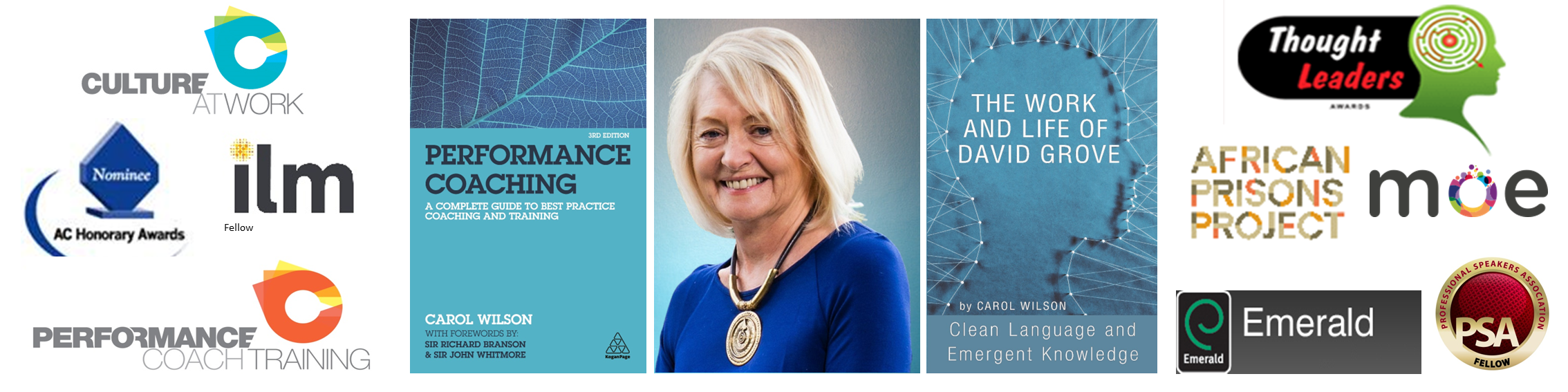 International speaker, writer and broadcaster Carol Wilson is Managing Director of Culture at Work and a Fellow of the Institute of Leadership & Management, the Professional Speaking Association and the Association for Coaching, where she is a member of the Global Advisory Panel. A cross-cultural expert, she designs and delivers programmes to facilitate change management and create coaching cultures for corporate and public sector organisations worldwide, and has won awards for coaching and writing. She is the author of ‘Performance Coaching: A Complete Guide to Best Practice Coaching and Training’, now in its third edition and featuring Forewords by Sir Richard Branson and Sir John Whitmore, and ‘The Work and Life of David Grove: Clean Language and Emergent Knowledge’. She has contributed to six other books and published over 70 articles including a monthly column in Training Journal.
To bring our Change Management services into your workplace, and for all your global coaching, mentoring, and leadership training requirements, visit us at